
 Orchid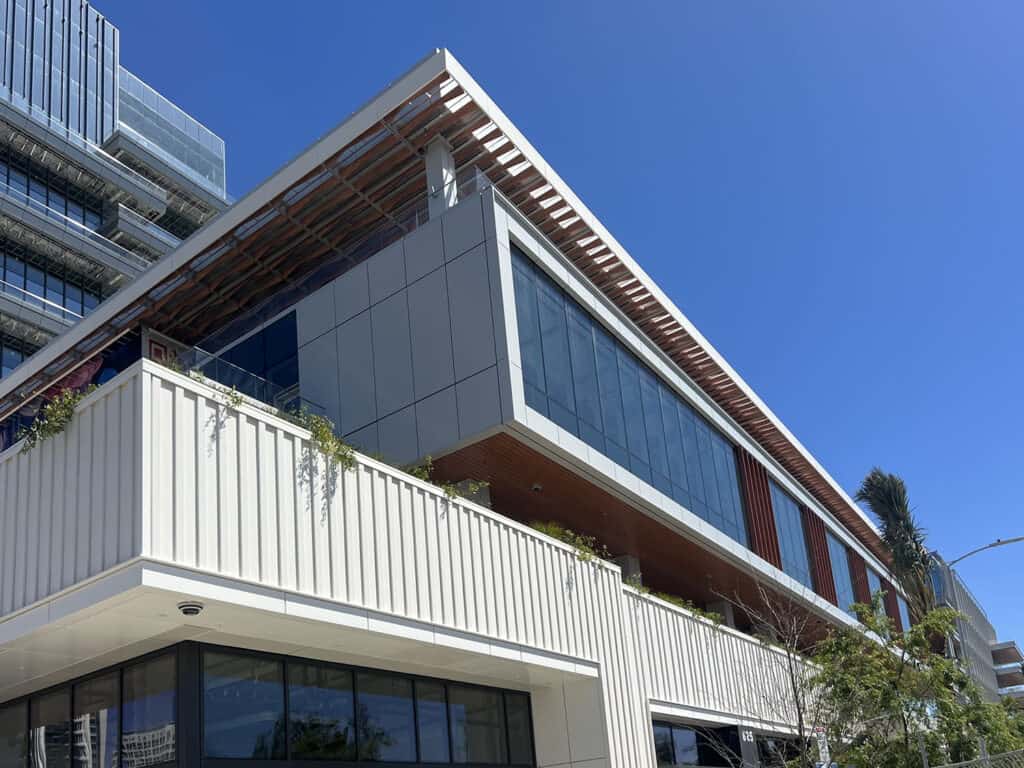

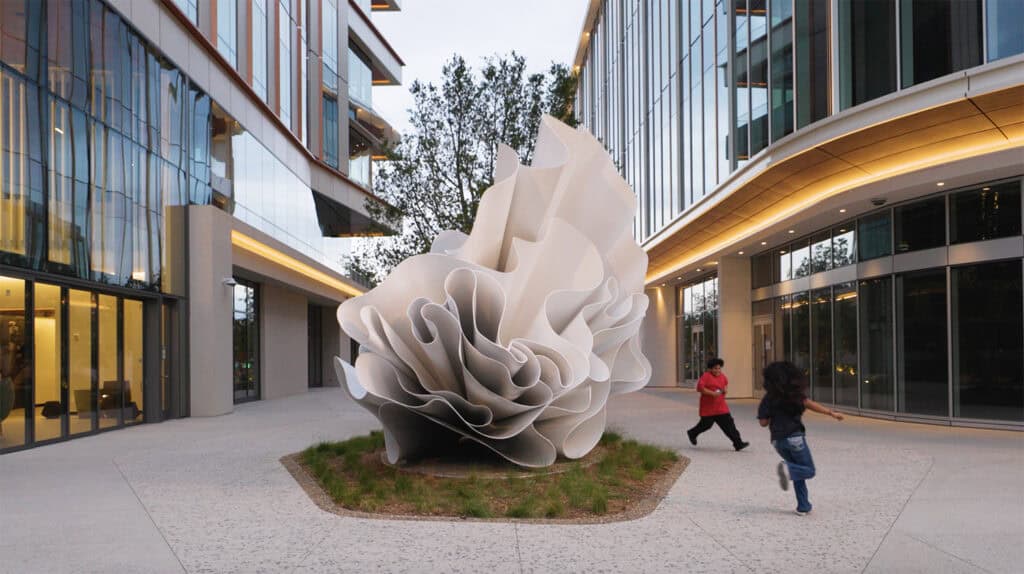
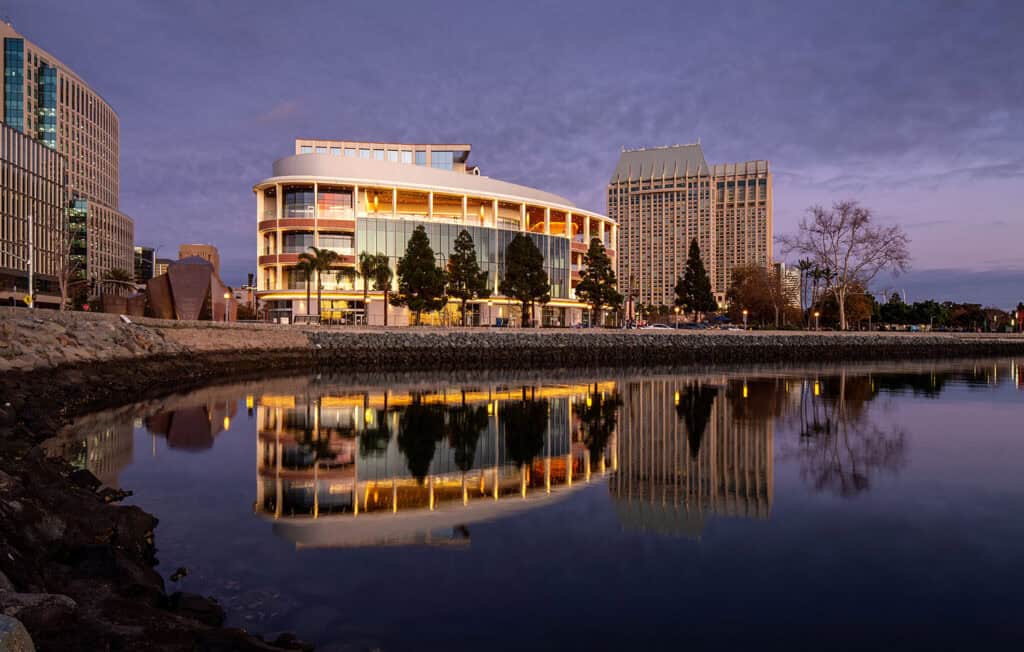
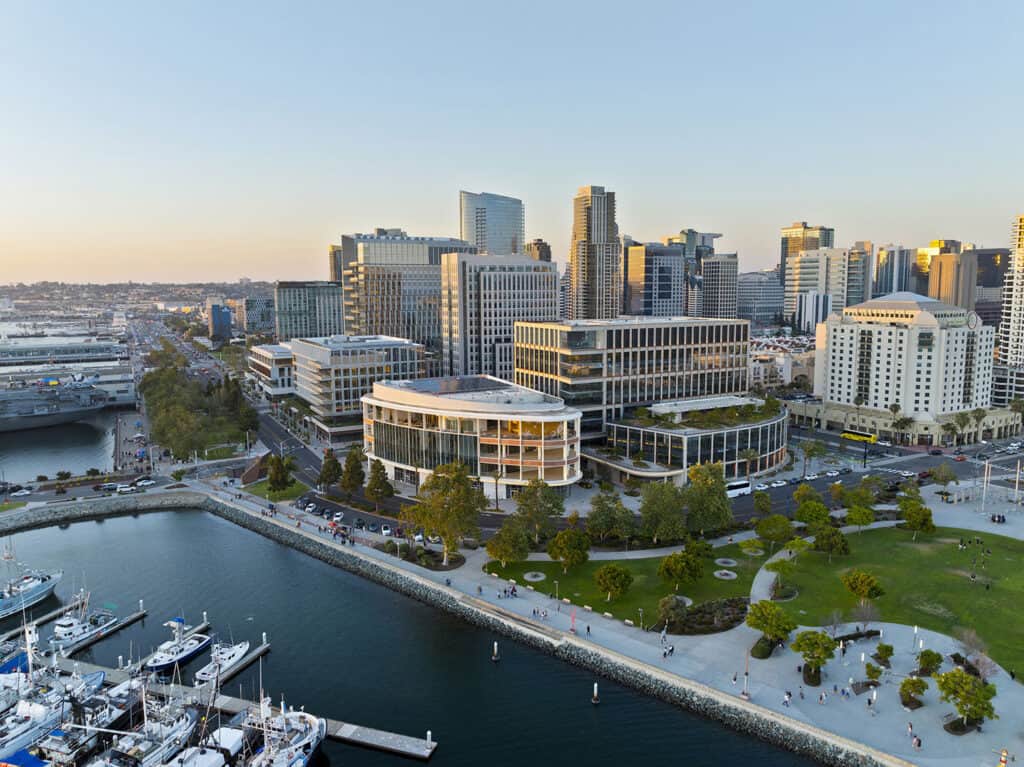
Located on the downtown waterfront across from the USS Midway Museum, the Research and Development District (RaDD) has transformed six underutilized waterfront blocks into a vibrant district, redefining the San Diego skyline. RaDD features five architecturally distinct buildings, a 1.7-acre park, a pedestrian paseo, and a public artwalk with 18 contemporary artworks, and brings a multifaceted urban experience to the waterfront.
Every aspect of RaDD’s design was thoughtfully considered to create an inviting and functional space that exemplifies excellent placemaking and honors the district’s iconic location. Each building has unique features, such as the bifurcated ground level in the Alley building that provides a seamless pedestrian link from the paseo to the San Diego Bay,, and the Vida building’s lightwell that infuses every floor with natural light and fresh air.
RaDD’s buildings use a warm material palette of light metals and glass, with upper portions clad in high-performance curtainwall systems featuring light-colored metal panels. Rhythmic pilasters and ventilation louvers conceal mechanical spaces and creating cohesive and visually appealing facades. Building heights gracefully step down towards the bay, offering clear views of the water and integrating seamlessly with the surrounding landscape.
Sustainability was a priority in RaDD’s design, and the all-electric buildings incorporate rooftop solar panels that supply up to 5% of each building’s annual energy consumption. RaDD also boasts one of Southern California’s largest EV charging infrastructures, and dynamic glass across the buildings enhances energy efficiency while preserving spectacular waterfront views.
By promoting accessibility, sustainability, culture, and wellness within a design-forward framework, RaDD is setting a new benchmark for urban development in San Diego.
This property is stunning! The EVE venue space on the fourth floor was one of the first to open and the way it incorporates the view of the harbor is gorgeous.
An interesting exercise would be to find and compare the renderings of the original Navy Broadway Complex Redevelopment project ( https://www.kpbs.org/news/midday-edition/2015/12/14/manchester-pacific-gateway-approved-now-what ) with what the project looks like now that Gensler got done with it. What was supposed to have been granite buildings morphed into steel and glass wall buildings all too typical of that companies designs. No one, certainly not the Navy or the city, held the Manchester firm accountable as it pursued a redesign of the project to bring down costs. Just an observation, not necessarily a complaint about how publicly approved plans and building designs turn into completed structures in this city.